
Does Creativity Deepen with Age?

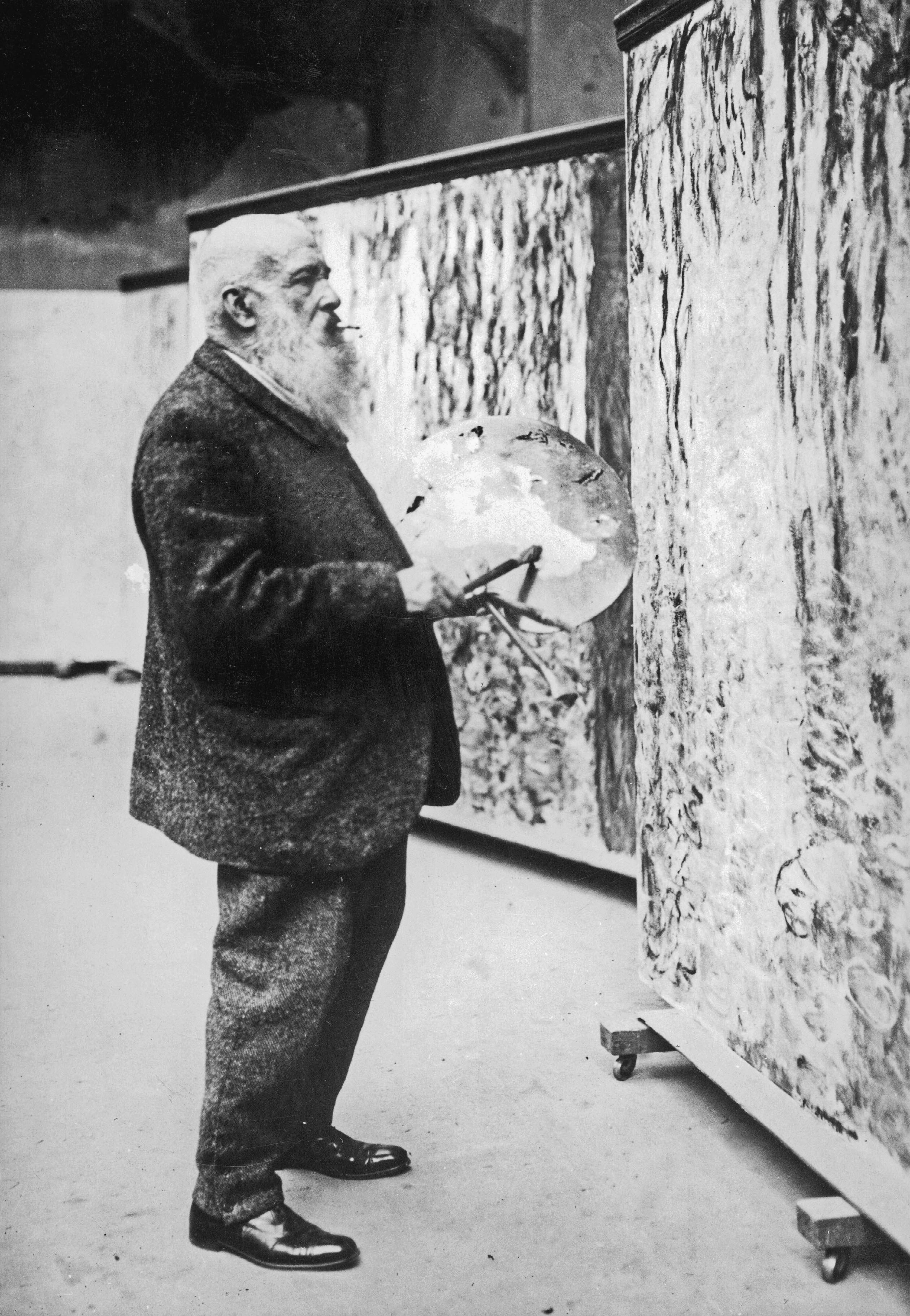
One of the indignities of aging is that your body literally starts to shrink.
I’m getting bigger in some spots—the spots I don’t want to get bigger, unfortunately—but then my bones are shrinking at the same time. I joked with a friend that I will end up a square blob if I live long enough.
I wondered if the same thing is happening to my brain, my thoughts, my imagination. I sometimes have trouble remembering a name. I often can’t remember what I did the day before. And I might have an earth shatteringly genius idea but then forget it before I write it down.
Each day is a debate: forgetfulness or dementia?
Still, I actually find the ruminating ruminations of my thoughts to be strikingly more interesting and just outright better than when I was younger. It’s ironic because when I first started out as a writer, I was enamored with the authors who wrote their masterpiece in their 20s—and I expected to do so myself.
The joke was on me. Turns out I didn’t publish my first book until I was 50.
I now identify as a late bloomer (and one who is thankful for blooming at all). I feel that the work I’m doing is better than the work I was doing at 30 because I am more willing to sit with contradiction, more interested in what I don’t know than in performing what I do, and much more attuned to nuance.
Like a veteran basketball player, I can choose my shots better. I know when to pass the ball.
And guess what? It turns out that, yes, creativity is different for many older people.
Rupture vs. depth
Years ago I read a book review of Old Masters and Young Geniuses: The Two Life Cycles of Artistic Creativity, by David Galenson, an economist at the University of Chicago. He distinguishes two types of creative innovators:
Conceptual innovators make sudden breakthroughs by formulating new ideas, usually at an early age.
Experimental innovators work by trial and error and arrive at their major contributions gradually, late in life.
Here’s the rub: the young’uns tend to rupture form, to assert “the new.” But “experimental innovators” are more likely to marinate their thoughts slowly over a lifetime of experimentation, “painting the same subject many times, and gradually changing its treatment in an experimental process of trial and error.” Life becomes a laboratory.
What experimentalists depend on is a deeper understanding of a subject that they accumulate over time. Their experiments lead to more layered and nuanced work—and their innovations emerge from immersion rather than rupture.
One important caveat worth knowing: Galenson stresses it’s a spectrum, not a binary. You aren’t simply one or the other. And … experimentalists aren’t behind, they’re just playing a different game. Late bloomers are not simply early bloomers on a delayed timetable.
The genius of trusting your process
I relate to Paul Cézanne—not his genius, but his journey as an artist. Cézanne always knew he wanted to be a painter. His father made him go to law school, which he left after two desultory years. He went to Paris at 21, got rejected by the École des Beaux-Arts, struggled, retreated, tried again, struggled more.
For most of his life he was considered, by those who considered him at all, a failure. His work sold for almost nothing. Critics ignored him or mocked him. He was 56 years old before he had his first real solo exhibition.
And then—he became Cézanne. It took him 56 years before he truly found his voice, his artistry.
A late bloomer like Cézanne’s superpower is not talent. It’s the willingness to keep going without external validation. To trust your process, your derring-do, your curiosity, your drive, your need, your thirst, your passion, your grit, your chutzpah, your whimsy, and your endurance.
Successful late bloomers are excellent at taking knowledge from one pursuit and applying it creatively to another. They avoid the rigidity of entrenchment and embrace the suppleness of play. They aren’t building a career; they’re building a self.
It turns out there’s no real slow or fast with creativity. We all have to go at our own pace.
Creative process prompt:
What is one thing that has changed about your creative process over the span of your lifetime?
Share how you feel your creativity has changed with age

In the name of writing
Because we need the wisdom of elders
“The great thing about getting older is that you don’t lose all the other ages you’ve been.”
—Madeleine L’Engle
“I am not young enough to know everything.”
—Oscar Wilde
“At 70, I realized that a long life is truly a gift—not for the obvious reason that it’s better than the alternative, but because only time can show you how the pieces of your life fit together.”
—Oliver Sacks
Celebrating the 6-month birthday of my book!

I talked to Grammar Girl about Memoir Writing!
Talking writing with Mignon Fogarty (aka Grammar Girl) is one of my favorite things in the world.
Because a photo
Boy, does this speak to my experience, Grant! Unlike you, I gave up before I began. Low self esteem. I had to live, to have experiences in order to have anything to write about, to find sufficient respect for myself to take a closer look. Then I discovered who I am and that I could DO this! That happened in my 70s, Grant. At 82, I’m still rising. For how long I don’t know, but I’m digging the ride.
As a 75 year old I find myself thinking and stepping into new territory often… I have my inner chat to be patient, listen deeply and say my truth…. Your words about creativity deepens with age gives me that boost of optimism and peace of mind.