

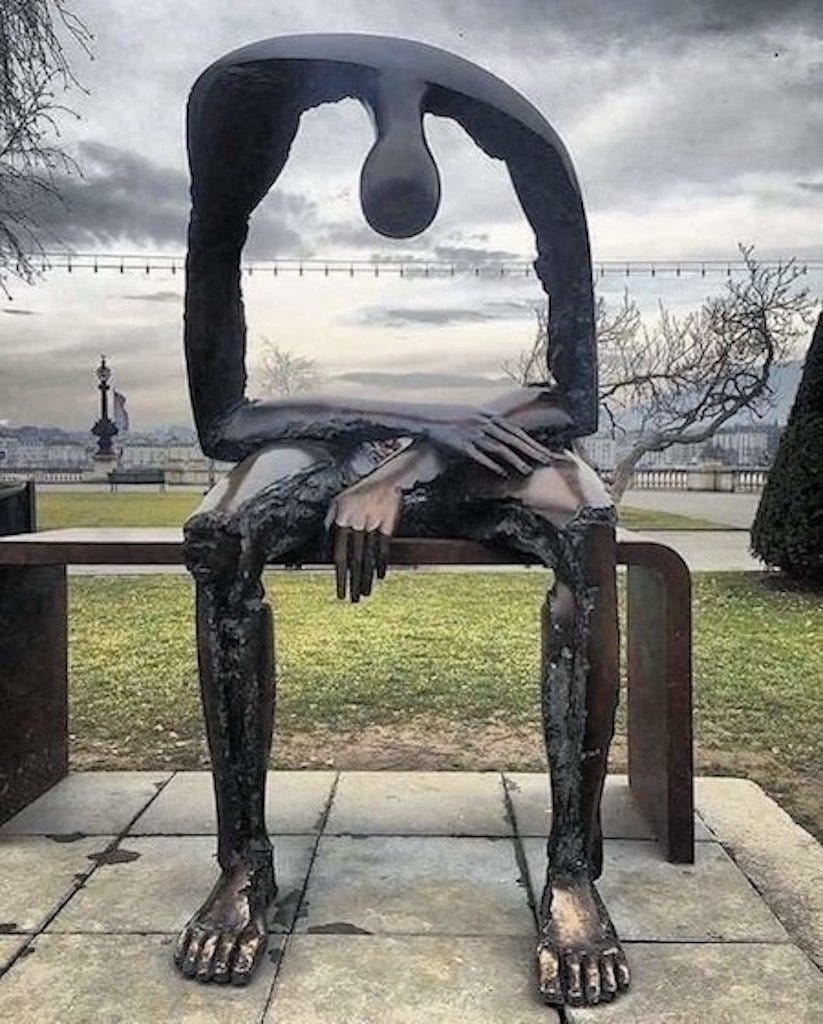
I’ve been obsessed all year by Sigrid Nunez’s statement that all stories are fundamentally about one thing: loss.
She essentially wrote a trilogy on loss in her last three books, starting with The Friend, which won the National Book Award, and then proceeding with What Are You Going Through and The Invulnerables.
We live by our loves, but we also live by our losses, which tend to so often be too intimate and personal to say aloud.
Loss might be described as a loud hush, in fact. It’s noisy in one’s head, but silent in the world, somehow both pervasive yet contained.
We live in a stoical culture where it’s frowned upon to talk of one’s loss. We’re supposed to buck up and move on, as if dealing with loss is a matter of will, a decision. As if grieving can follow a schedule.
No. Our losses form our identity as much as anything. Our losses have the strength to last a lifetime.
Nunez writes in The Friend: “What we miss—what we lose and what we mourn—isn't it this that makes us who, deep down, we truly are. To say nothing of what we wanted in life but never got to have.”
Loss and writing
I’ve wondered if I write in order to “keep”—to preserve, as if I’m an archivist of life, and then understand as a result. It’s like I’m a hoarder of matters of the soul.
In my Substack last week on “lectio divina,” I wrote about losing the chair where I had done so much “divine reading” for years. I quoted the photographer Nan Goldin, who once said, “I used to think that I could never lose anyone if I photographed them enough.”
I wonder if this is an unspoken reason I’m so drawn to writing—to hold this elusive and beguiling and damning life for just a moment and try to understand it before it slips away.
Our words are one way to possess. Or try to possess. Writing is an act of futility.
Nunez writes in The Friend: “You write a thing down because you're hoping to get a hold on it. You write about experiences partly to understand what they mean, partly not to lose them to time. To oblivion. But there's always the danger of the opposite happening. Losing the memory of the experience itself to the memory of writing about it.”
We think of our words as a way to create life, but writing about loss is a type of burial. Putting grief into words is a way to say good-bye. Many a loved one, a lost one, has been buried in the cemetery of my words.
Grief has its own rhythms
Roland Barthes remarked on how after his mother died, he was startled by how his grief would interrupt his day in unexpected ways. He couldn’t anticipate when a memory, a moment of longing, would appear.
Grief, like love, spirals in unruly ways. Grief is a form of love, after all. Full of an impossible longing. Nunez writes in The Friend, “You can't hurry love, as the song goes. You can't hurry grief either.”
The Friend deals with a mentor's suicide, so it’s full of the mystery of suicide and how it leaves those behind with unanswerable questions. But loss weaves its way through a Nunez novel in many different ways. There’s a powerful sense of time passing, of nostalgia, or even the anticipatory loss in What Are You Going Through, where she explores a friend dying of cancer.
As writers, we stretch and stretch to capture the mysteries and nuances of such an experience, but we inevitably fail. As Nunez writes in What Are You Going Through, “No matter how hard we try to put the most important things into words, it is always like toe-dancing in clogs.”
I think of Martha Graham’s notion of “divine dissatisfaction”—that we must reach and strain to make our work sublime, divine, but a good artist is constantly frustrated at the same time. Our words will always be clumsy when trying to convey something so laced with contradictions, collisions.
The art of losing
Loss and longing go together. In a past post on longing, I wrote:
“Longing carries with it an idea of a type of utopia lost. Or a utopia searched for. It’s painful, yet somehow pleasurable at the same time. We’re mythologizing something, making it larger than life through our longing, so we’re fictionalizing it, living through a projected story, and creating an idea of life that is really impossible in the end.”
As we grow older, “loss becomes the primary condition of living,” Nick Cave says. “That doesn’t mean you’re in a hopeless, grief-stricken state all the time; it just means that you carry a deeper understanding of what it is to be human.”
A defining aspect of human experience is the constant collision between our wishes and reality, the sharp clack of a door closing on our expectations, the destruction of our plans.
Life is bewildering because it combines fullness and an inevitable failure. Hence art.
My creativity strangely thrives with loss—loss as both as a catalyst, a driving need, and then the raw material loss provides. Emphasis on “raw.” Loss often shatters my existing life structures, jarring the routines of my thoughts, taking me over, in fact, into a land of constant confusion and irreconcilable contradictions.
Elizabeth Bishop ironically wrote, “The art of losing isn’t hard to master,” in her poem, “One Art,” the poem I’ve read more times than any other (I even memorized it once). But the art of losing is hard to master. Even with so much practice. An abundance of practice.
The question still haunts me: Are all stories fundamentally stories of loss?
I suppose yes.
Writing prompt
Is there something you’ve lost that obsesses you? A person, a love. A favorite souvenir, an important token of the past?
Write one sentence as a tribute to that loss. Think about how to convey the “mythology” of that loss, the details of the experience, while also exploring your mood, your tone, the images you use, the feelings that rise up, or the feelings that don’t rise up.
Or just write and write and write about your loss and see what you find.

Please become a paid subscriber …
A subscription guarantees writing karma.
Because a quote
“For to wish to forget how much you loved someone—and then, to actually forget— can feel, at times, like the slaughter of a beautiful bird who chose, by nothing short of grace, to make a habitat of your heart.”
—Maggie Nelson, Bluets
Free Class! The Art of Brevity
I’m teaching a free class with Domestika, where I just learned my class, Novel Writing: Bring Your Book Project to Life, is a best-seller.
I’m teaching The Art of Brevity, on Tuesday, August 12, from 8-9 Pacific.
We’ll dive into my book, The Art of Brevity, for a workshop that explores the power of writing with precision and purpose. Discover:
How creative limits can unlock surprising ideas
How to write with suggestion, tension, and subtlety
How the art of omission can bring stories to life
Contact me about my one-on-one work with writers
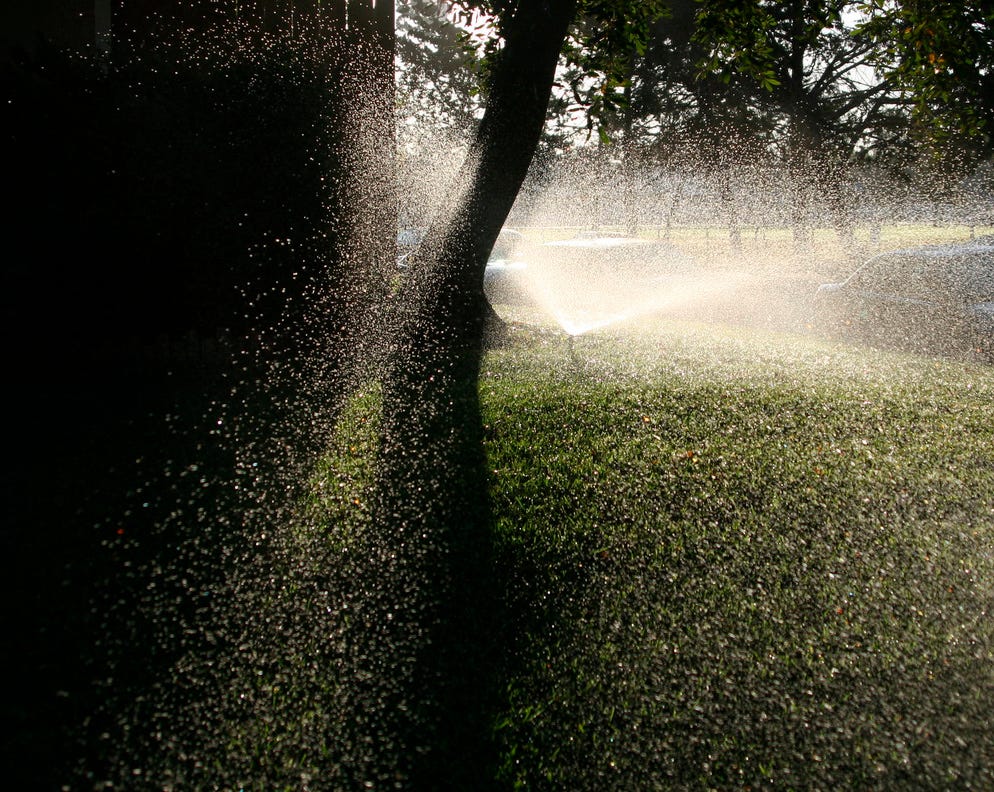
Because a photo prompt
Each month in 100 Word Story, we offer a photo prompt and invite people to post their stories. Then we choose our favorite story to publish.
Write your story to the photo below—and post it here!
Inspiring piece. I have a loss that has picked at me for years, yet I am reluctant to write it down, write it out. Your prompt will guide me. Can you tell us more about that evocative sculpture as well? Thank you.
Too weird. I had just pushed SEND on a blog post that recommends one should "invest in loss" when I get pinged that a new message has arrived in my in box. It is your very fine essay here, Grant. Serendipitous? Coincidence? Maybe we tapped into some stream of cosmic consciousness? Anyway, thanks for so beautifully and poetically enhancing my thinking on these matters, Grant.