
Urgency as Creative Guide?
Making the ticking clock your friend.

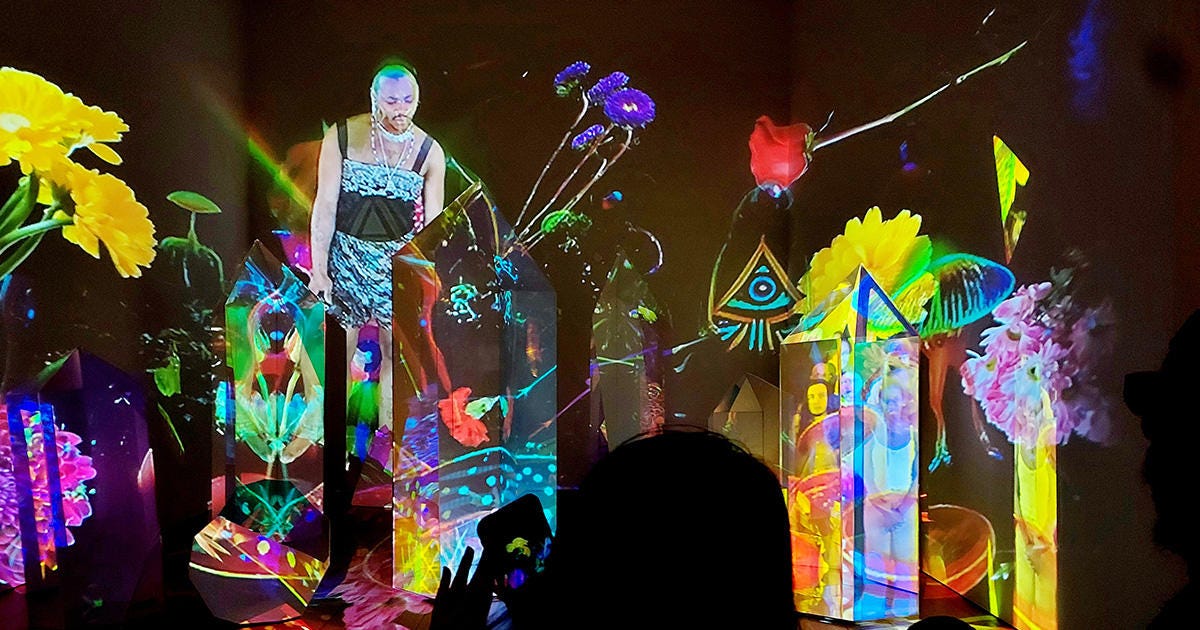
Between turning 61 (and doing all of the math of life) and undergoing a variety of heart problems (and doing all of the math of life), I’ve been living life with an increasing sense of urgency.
It’s good. It’s bad. But mainly it’s good—how everything is becoming more magnified, more vivified, more sensual, more gustatory, more emotional, more piquant, more poignant, more loving, more reckless, more sacred, more blessed, more humorous, more absurd, and just more—just more and more of everything.
Breathlessness. I like breathlessness.1
“Urgent” is a word that holds many layers, but the urgency I feel has generally expanded life in so many ways—which is ironic because it also fills me with the need to get things done before time runs out.
The urgent presses, it won’t wait.
The urgent can feel like an external attack—beyond my control.
But my urgency is also full of appetite, impulse, and drive—to the extent that it feels like it takes my body over.
My urgency guides me to what matters. It compresses the future into the present.
Yes, I still like to write in noodling, leisurely spirals—but I also like how the pressure of urgency pushes me to be more open, more me.
So urgency opens a way of getting out of my own way.
I ponder this question: how do you honor the urgency that brings you to the page (or the page of life) without letting it rush you past the very moments that matter?
I think of photography: it captures what has been so it will never go away. It is an act of pausing. Writing also is an act of pausing to preserve, to capture. Even if disappearance is guaranteed.
I don’t want to disappear. At least not until I write the words I need to write.
Writing against time
I think of creators who wrote frantically, as if running to keep just ahead of time.
Ulysses S. Grant was diagnosed with throat cancer at the same time he discovered he had been swindled out of his entire fortune by a con man. He wanted to provide for his family before he died. He wrote 300,000 words in just one year, often in tremendous pain, sometimes unable to speak, sometimes dictating when his hand gave out, finishing the final pages literally days before he died. His memoir is considered the best by any American president.
Katherine Mansfield was diagnosed with tuberculosis in 1917 and died in 1923 at 34. She wrote faster and more honestly as she got sicker. “I want to write about things that matter,” she wrote near the end. “I want to write with my whole self.” The stories from her final years—“The Garden Party,” “At the Bay,” “The Fly”—have been noted to have an intensity that her earlier work lacked.
F. Scott Fitzgerald was broke and alcoholic at the end of his life, and he had to support his wife Zelda’s institutionalization and his daughter Scotty’s education, so he went to Hollywood as a screenwriter and hated it. But in his final years he wrote The Last Tycoon—unfinished when he died, but I think it might have become his best novel.
William Faulkner wrote as many as 10,000 words a day to support not only his immediate family but a sprawling extended household—his wife, her children from a previous marriage, his own daughter, and various relatives. He was chronically broke, but that drove him to write some of his best work. He wrote As I Lay Dying in six weeks. He wrote Sanctuary explicitly to make money, and it became his bestselling book.
Honoré de Balzac was catastrophically in debt for most of his adult life. He slept four hours a night and was fueled by enormous quantities of coffee, writing ninety-odd novels and stories of La Comédie Humaine in just twenty years. The financial pressure was his creative engine, though, even as his heart failed. He died at 51. Without the debt there might have been no Comédie Humaine at all.
When you know you are dying
When you know you are dying, you cannot afford to waste time, so the work becomes ruthlessly and blessedly itself. There is something about constraint that focuses your attention on what actually matters.
The risk statistician Nassim Taleb has a concept he calls “antifragility”—the property of systems that become stronger under stress rather than merely surviving it.
Perhaps this is what urgency gives: with life ending, instead of feeling panic, which weakens us, we must embrace urgency for all of the powers it holds—to become stronger even as our strength lessens.
I think of the haiku concept of mono no aware—which means “the pathos of things” or the “bittersweet beauty of transience.” It describes a gentle, wistful sadness felt when realizing that everything in life is temporary, coupled with a deep appreciative joy for having witnessed that beauty in the first place.
So mono no aware is a counterpoint to urgency—the haiku doesn't rush toward the moment, it arrives there and stops.
We all have to arrive there and stop. Fortunately, we have a choice in how we do that.

My course on “writing with love”

In the name of urgency
Because a quote
Summer grasses
All that remains
Of warriors' dreams
—Basho
Because a poem about urgency
... A lifetime of saying, sure, why not,
i’m only on earth x number
of years, and not knowing what
to make x. Sometimes I pick a number
I’ve already passed. I remember
the gambler’s credo — when you only
have fifty bucks left in this world,
you’d better get rid of it fast; the last
thing you want is money around ...
An excerpt from “Other Things, If Not More Urgent Things,” by Natalie Shapero
I have open coaching/editing spots!
I love working with writers, and I have some space on my Writing Consult calendar if anyone’s looking!
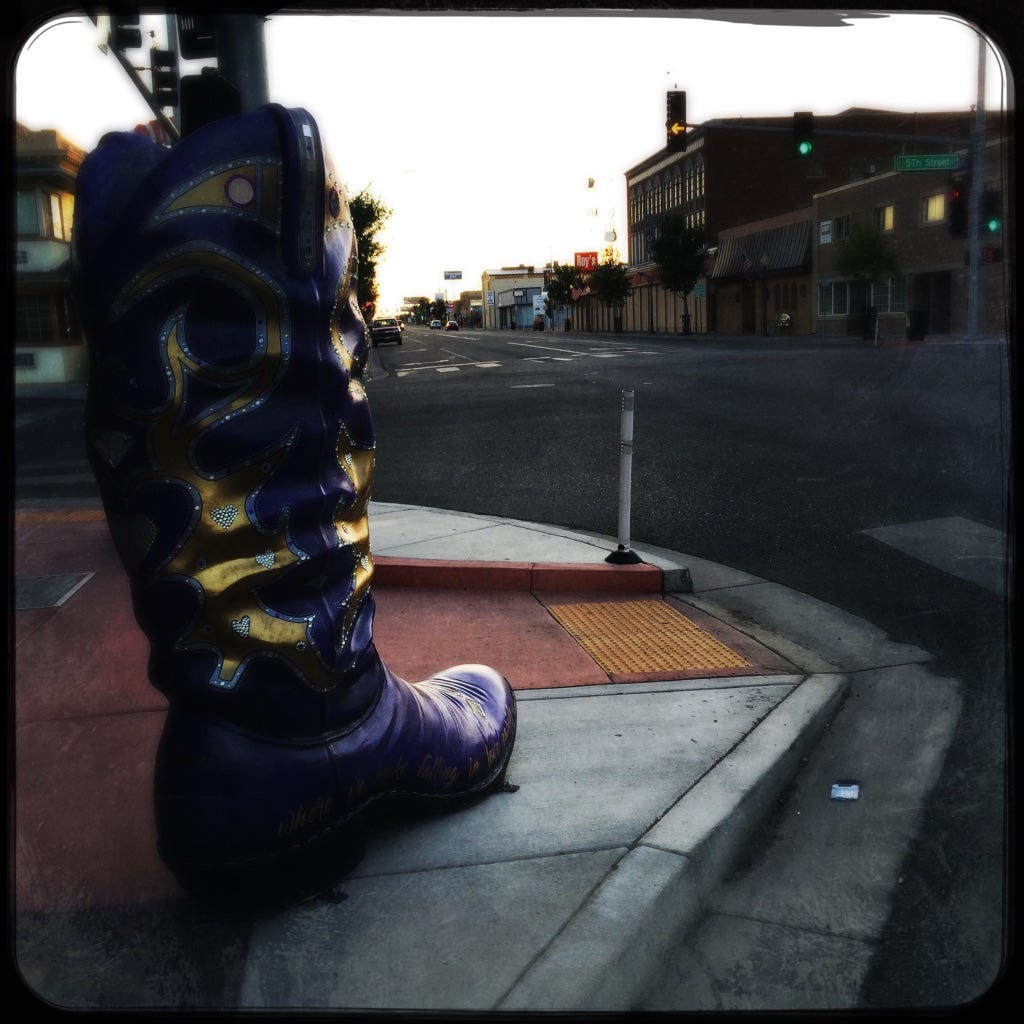
Because a photo
Thanks for reading Intimations: A Writer’s Discourse!
This post is public so feel free to share it.
I am a long distance runner at heart. I find exhaustion seductive.
How fascinating, even more interesting because I woke up thinking about how time is literally an hourglass, with the feeling that there is more sand piled up around my feet than falling down around me. Still, we have some sand left above our heads, so what are we going to do with it?
Grant,
I too had a heavy diagnosis recently. My writing is more direct, deeper and urgent now. However, anxiety still creeps in some days and then I need to swim, look at the sky or talk to a stranger. It is freeing and heavy to hold the temporality and fragility of life but it makes you look closer at what matters and moves you in the moment.