
When Silence Is Violence
The art of not using your words


I bet all of you have received the silent treatment at some point in your lives.
Unfortunately, I bet most of you have also given someone else the silent treatment (guilty as charged).
The silent treatment seems hard-wired in human brains, strangely enough. It doesn’t matter how intellectual a person is or what level of achievements they’ve accomplished, so many of us resort to weaponizing silence when we feel hurt or wronged.
Another’s cold silence is a troubling moment of angst and drama, on and off the page. To banish someone. To deny them your friendship, your love, your respect. To deny them the possibility of reconciliation, of expression, of peace. To deny them their very humanity.
Silence can be a slashing moment of violence. But it’s also its own cry of pain.
I often think of the many times I watched my children’s preschool teachers coach kids to “use your words.” A preschool lesson, but it’s so hard to master that most adults don’t truly know how to use their words. Humans have been on this planet for thousands of years, yet we still haven’t figured out how to express our problems with another in a kind and constructive way.
So we use silence as violence. The silence might as well be a dagger. Because when you’re given the silent treatment, the other person’s “I don’t care about you” pierces your psyche like a knife pierces your skin. Another’s silence tells us to get away and stay away. We’re told we don’t matter and perhaps never mattered.
We even created a modern-day word for it: ghosting. The silent treatment is meant to haunt. Its victims hear the ghost’s chains rattling in the middle of the night. Its victims cry out but don’t hear a response.
Strangely enough, we’ve normalized ghosting. It’s just another communication tool.
Why choose silence over words?
The silent treatment is perhaps the least effective way of communicating, but it’s often chosen because it feels so effective: “I’m going to show you how much you hurt me.” “You will be sorry because you have lost me.” “You are dead to me now.”
Going silent can feel safer than speaking. Some people use the silent treatment because they’re overwhelmed, unable to form words in the heat of conflict, so withdrawal is the only exit they can find.
But that’s the benign version. For others it’s a deliberate instrument of control—a way of punishing someone without leaving marks, of asserting power while maintaining the appearance of normality. The genius of it, from a manipulator’s perspective, is the deniability. Nothing was said. Nothing happened. And yet the pain goes deep.
There’s also a third category: people who learned the silent treatment as children, who watched a parent go cold and quiet after a disagreement, and then absorbed it as they way adults handle conflict. They’re not consciously choosing cruelty. They’ve unconsciously internalized a way of being. This kind of silence sometimes results from intergenerational trauma.
What all of these versions share is that silence functions as communication—it sends a message precisely because it withholds one. It says: “You are not worth my words. I have the power to make you invisible, and I’m using it.”
There’s a particular cruelty in silence’s ambiguity. If someone shouts at you, the message is clear. If someone goes silent, you’re left to interpret—to wonder what you did, whether you imagined it, and how to fix it. That uncertainty keeps the target in a state of pained limbo, scanning every micro-expression for signals, trying to solve a puzzle that has no announced rules.
There’s also a power dynamic worth naming. Silence is almost always deployed by someone who has something you need—a parent’s approval, a partner’s love, a boss’s recognition. It works precisely because of that dependency.
That is the cruel power of erasure. It strikes at something more fundamental than hurt feelings—it attacks the sense that you matter as a person.
The silent treatment causes physical pain
Research shows that this “stonewalling,” as psychologists call it, registers in the brain similarly to physical pain. Our sympathetic nervous system reacts when we think that a social bond is under threat, and our dorsal anterior cingulate cortex—the region of our brain responsible for processing pain—lights up.
Dr. Kipling Williams of Purdue University, probably the leading researcher on ostracism, said: “Excluding and ignoring people, such as giving them the cold shoulder or silent treatment, are used to punish or manipulate, and people may not realize the emotional or physical harm that is being done.”
What looks from the outside like someone might be overreacting is, from the inside, a nervous system quietly panicking. This isn’t sensitivity or oversensitivity. It’s biology.
It turns out that the silent treatment is a dagger that stabs more than your flesh—it stabs your soul.
The silent treatment on the page
How do you describe such a silence? How do you render what’s not said with cruelty and pain on the page? How do you show he violence in absence?
The answer is usually to write around the silence—to render the room, the body, the waiting, the watching for a signal that never comes. You don’t describe the cold shoulder directly. You describe standing in the kitchen while someone moves past you as though you’re furniture. The reader feels it because they’ve felt it too. Everyone has.
This harkens back to John Gardner’s famous exercise in The Art of Fiction: “Describe a barn as seen by a man whose son has just been killed in a war. Do not mention the son, war, or death. Do not mention the man who does the seeing.” In other words, don’t state the emotion. Convey it.
Lessons from the stage
You can also do this through dialogue. The kind of dialogue that reveals a character’s violence through the subtext of what is unsaid. Passive aggressive dialogue. Silence isn’t just the absence of words, it’s what words are working to conceal.
My favorite book on writing dialogue—especially violent dialogue—is Verbal Violence in Contemporary Drama: From Handke to Shepard by Jeanette R. Malkin. Malkin provides so many insights into violent dialogue—and violent silence.
Harold Pinter describes two kinds of silence in the book:
“One when no word is spoken. The other when perhaps a torrent of language is being employed. This speech is speaking of a language locked beneath it. That is its continual reference. The speech we hear is an indication of that which we don’t hear. It is a necessary avoidance, a violent, sly, anguished or mocking smoke screen which keeps the other in its place.”
Pinter’s own plays provide a masterclass. The Birthday Party and The Dumb Waiter include competitive interpersonal relationships and the use of silences and pauses that present a non-verbal way of communication—creating ambiguity, nebulousness, and menace.
By reading these plays, you can learn something you can’t get from prose alone: how to create threat through what isn’t said, through the shape of an exchange rather than its content.
Silence is never just silence. It’s always speaking a language locked beneath it.
Writing prompt
Write about a time when someone’s silence hurt you more than their words could have.
Life prompt
If you’re giving someone the silent treatment, how can you find a way to put your hurt, your problem, into words.
If you’re on the other end of the silent treatment, how can you use your words to express the pain you’re experiencing?
As the Dalai Lama said, “Be kind whenever possible. It is always possible” How can you make kindness possible?

Please support my work
Because a quote
“Your silences will not protect you.... What are the words you do not yet have? What are the tyrannies you swallow day by day and attempt to make your own, until you will sicken and die of them, still in silence?”
— Audre Lorde
My book tour!

I am speaking and teaching at Salisbury College from March 1-3, and then I’m doing several readings at the AWP Conference in Baltimore on Thursday and Friday this week if you’re around. More info on my socials …
Laugh Lines: Finding Comedy in the Everyday

Some of us have been told from an early age that we couldn’t be funny if our lives depended on it. But if there’s a will(ingness to laugh, there’s a way, so join the amazing writer and amazing (and funny) teacher Christine Sneed (author of the wonderful Bookish) and banish the critical voices in your head to find your funny bone.
This is a class with the org I co-founded, the Flash Fiction Institute. Thursday, March 12 | 5pm PST/8pm EST.
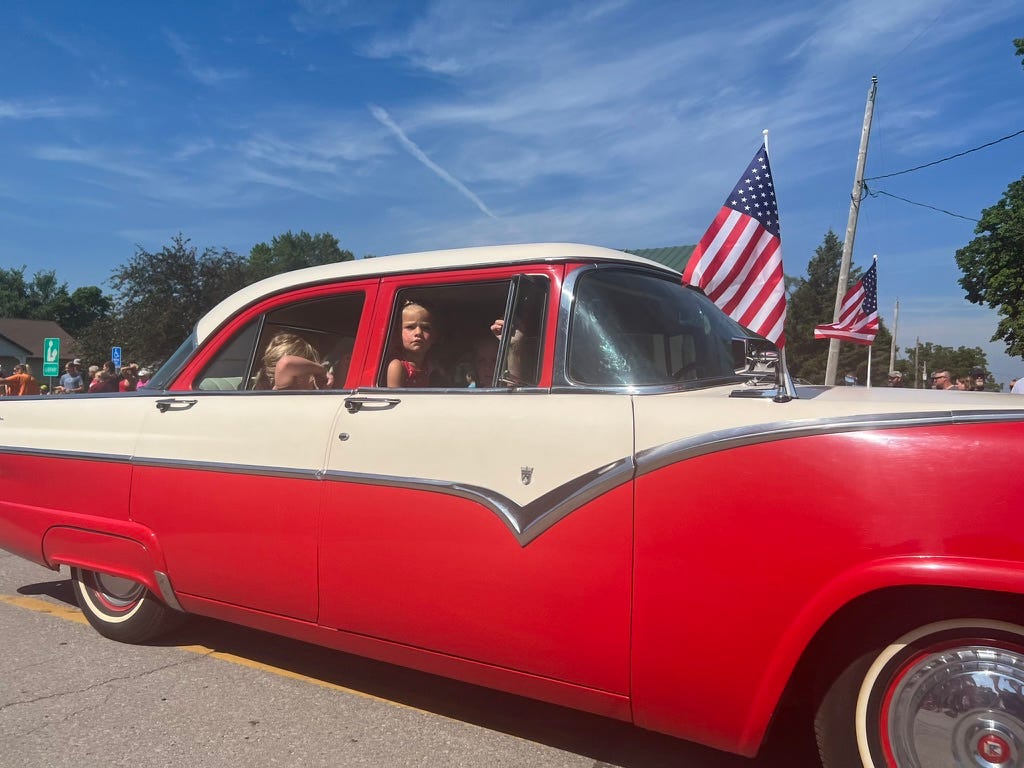
Because a photo prompt
So interesting. Silence is also so self-protective. While you're shutting the other person out, you're protecting yourself. It's like leaving the room and closing the door.
Love this sentence- The genius of it, from a manipulator’s perspective, is the deniability. Nothing was said. Nothing happened. And yet the pain goes deep."