
Reclaiming time
Time isn't meant to be kept in an accountant’s ledger.


Time is on my mind.
You might say it’s always on my mind, in fact. If only because I’m always a little bit out of breath trying to keep up with everything I need to do in a world where there is not enough time.
None of us will ever feel on top of our lives, sad to say.
I’m also thinking about time because Brooke Warner and I interviewed time-management guru Laura Vanderkam on the Memoir Nation podcast, and Laura provided really interesting thoughts on time—and writing and time.
After speaking with her, though, I’ve started to question the very phrase “time management” and what it has come to mean. Time isn’t something to be managed, after all. Time is something to be experienced.
Most time management advice assumes that time is uniform, measurable, and optimizable. It treats hours as containers to fill efficiently. But this misses that lived time has quality, not just quantity (and Laura would agree, I know).
Ten minutes of deep attention feels entirely different from ten minutes that is bullied about by interruptions. Five minutes waiting can feel eternal while five minutes of joy vanishes instantly.
The French philosopher Henri Bergson distinguished between measurable clock time and “duration” (durée)—our lived, subjective experience where moments expand or compress based on attention and memory.
What if time management is less about maximizing output per hour and more about cultivating conditions for the experience of duration? The goal then becomes protecting stretches so time feels expansive rather than chopped into tasks.
If your writing time turns into multitasking—as mine tends to do—then time splinters. We’re always half-anticipating the next thing, so we never fully inhabit what we’re doing.
How can we deepen the present—allowing tasks to unfold? Much productivity advice is future-oriented (goals, planning, optimization). But what about being present? The paradox is that obsessive time management can make you miss your actual life.
I want to reframe “time management”—to shift from “how do I get more done?” to include “how do I actually inhabit my time?”
Creating inspiration through the experience of time
Marcel Proust was obsessed with the nature of time and memory. His novel, In Search of Lost Time, is essentially a 3,000-page investigation into how we experience time and how memory resurrects it. The entire novel emerged from his conviction that the past isn’t simply gone—it’s recoverable, but not through willful recall.
This is exemplified by the famous madeleine scene: the narrator tastes a small cake dipped in tea, and suddenly his entire childhood floods back.
The past literally becomes present again, with all its emotional intensity and sensory richness. He doesn’t remember his aunt’s house; he’s in it again—as a middle-aged man and as a child.
This experience shows how nothing is truly lost in our lives—everything we’ve experienced is still somehow preserved and accessible if the right scent, taste, whisper, or tickle appears. The writer’s task is to find those triggers, to excavate buried time.
So … as much as writing is about “putting your butt in the chair” for the purpose of productivity, writing is also about evocation. “Putting your butt in the chair” can mean things like daydreaming, wondering, wandering, noodling, and doodling—all vital ingredients of creativity.
“The world is bursting with wonder, and yet it’s the rare productivity guru who seems to have considered the possibility that the ultimate point of all our frenetic doing might be to experience more of that wonder,” wrote Oliver Burkeman in Four Thousand Weeks: Time Management for Mortals.
I always say that you create inspiration with your words—your time writing is its own type of muse. But “writing” is also a “non-productive” act. That’s why I’ve called writing my version of prayer—I’m speaking with a mysterious world beyond myself, so I need to nourish the conditions for this. I need to search for wonder.
Alternatives to using time “productively”
Bergson would say that clock-watching fragments duration into discrete units, interrupting the natural flow of absorption. Real satisfaction comes from that sense of having been in something—a conversation that meandered, a story you got lost in. This requires protecting time from interruption, but also from the productivity mindset itself, which constantly measures and evaluates.
What if the goal isn’t to “save” time for later but to spend it now, generously? To linger over breakfast. To take the long walk. To have the unscheduled conversation. Not because it’s “self-care” squeezed into the optimization regime, but because this is what it means to have lived your time.
Our cultural narrative tells us time is scarce and must be hoarded and spent wisely. But what if abundance comes from depth rather than accumulation? From being less managerial with your hours and more present in them?
The quality of time is really about the quality of attention we bring to it. When you’re fully present, time becomes both richer (you notice more, feel more) and more expansive (you lose self-consciousness, the anxious monitoring stops).
The irony is that trying to “manage” this kills it. You can’t force depth, but you can create conditions for it.
An argument against JanYourStory?
This all might sound like I’m making an argument against Memoir Nation’s JanYourStory—a challenge to write 500 words per day in January—because it is in part an exercise in productivity.
Au contraire. I want the 500 words to be an exercise in creativity. And I want you to nourish your creativity by showing up to write, by reaching for 500 words a day—because, yes, productivity matters. But a better way to think of productivity is to think of it as momentum.
In fact, momentum matters most of all in writing. So I define writing as an act that includes daydreaming, wondering, wandering, noodling, and doodling.
My message: optimize your writing time for joy and meaning and the blessedness of your imagination—and find joy and meaning and the blessedness of your imagination by writing 500 words per day in January.
Time management challenge
What is one thing that you could decide not to do in order to make time for your writing—true time for your writing?

Please help me publish this newsletter?
Because a quote
“The real measure of any time management technique is whether or not it helps you neglect the right things.”
—Oliver Burkeman, author of Four Thousand Weeks: Time Management for Mortals
Making time for writing
As part Memoir Nation’s “JanYourStory Prep” series, we interviewed time management guru Laura Vanderkam. Laura advises to think in weekly increments, which looks something like this.
You have 168 hours each week.
You have 112 hours after sleeping 8 hours a night.
You have 72 hours after working 40 hours.
How do you fill those 72 hours? Time management is about choices.

Join me in JanYourStory!

What is JanYourStory?
In short, the challenge is to write 500 words each day in January. We at Memoir Nation want you to use the power of the new year to start your memoir or give your current memoir a serious new liftoff!
Because a photo
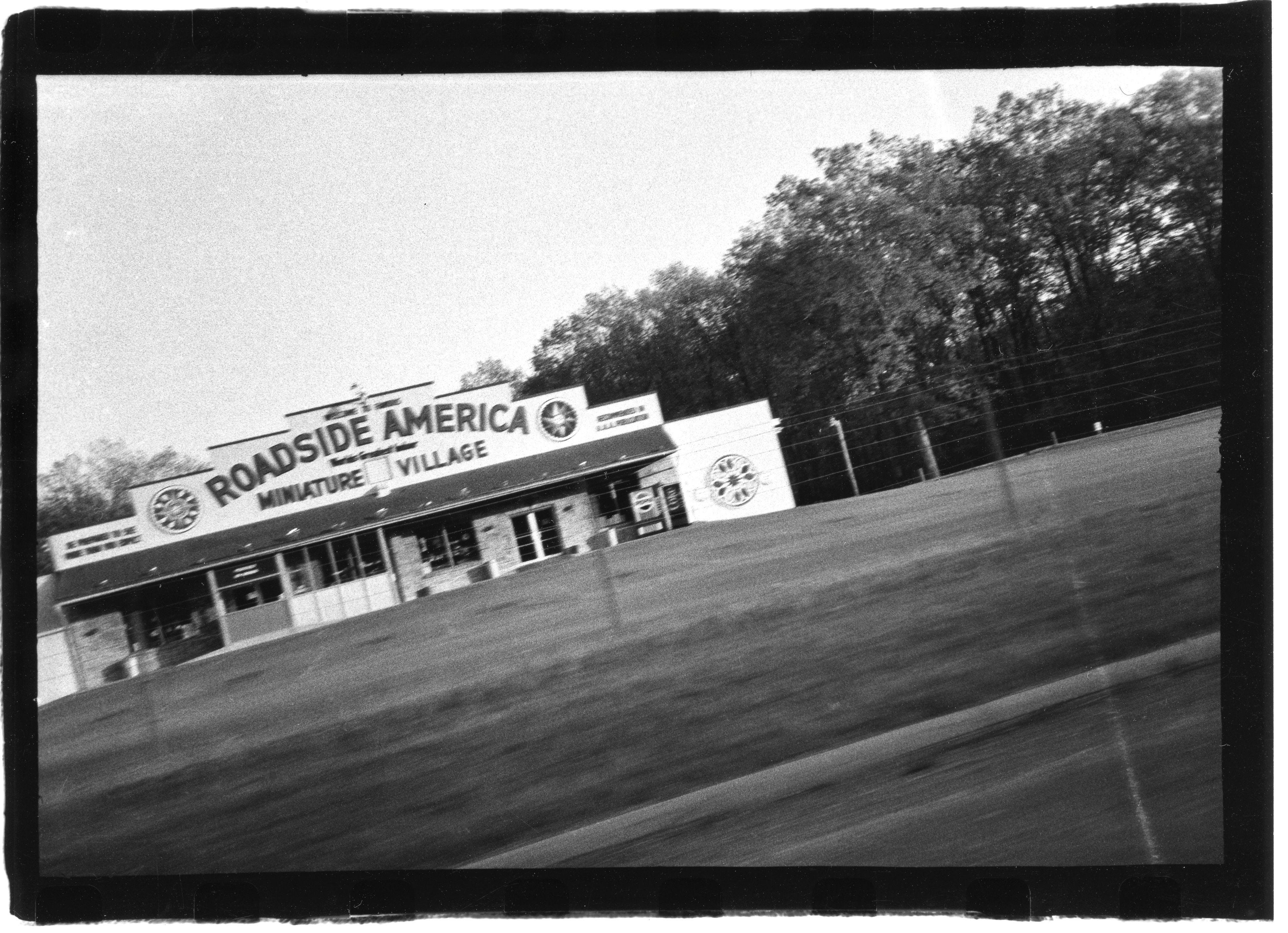
The above photo is from my new book, something out there in the distance, which is my favorite book I’ve published so far.
It consists of a series of linked “short-shorts” written in conversation with my friend Gail Butensky’s wonderful photos. I hope you’ll buy my book.
Thanks for this. I spent the last 15 years of my working life micro-managing every moment and since leaving that world, I’ve done everything in my power not to time manage my moments. I’m going to give further thought to how I can apply this to my writing - I only know that when the story is heartfelt, moments writing are never about time or word count - they are indeed depth and flow and absolute enjoyment. Thanks again.
Great post. Thank you Grant! ❤️